
Earlier last year, a new term entered public discussion in China’s digital marketing industry: Generative Engine Optimization (GEO).
The topic gained attention after it was mentioned during the China Central Television 3.15 Consumer Rights Day Gala, an annual broadcast that exposes unethical business practices affecting consumers.
During the program, reporters revealed that some companies were offering so-called “GEO services” designed to manipulate how artificial intelligence tools generate answers. In one demonstration, journalists created a product that did not actually exist and then purchased these services. Shortly afterward, AI systems began recommending the fictional product in response to user queries.
The exposure raised concerns about how AI-generated answers can be influenced by large volumes of fabricated online content.
At the same time, the discussion also highlighted a broader reality: as AI tools become a common way for people to search for information, businesses must begin to think about how their brands appear within AI-generated answers.
This is where Generative Engine Optimization (GEO) becomes relevant.
However, the practices exposed during the broadcast represent misuse of the concept, not the true purpose of GEO.
What Is Generative Engine Optimization (GEO)?
Generative Engine Optimization (GEO) refers to the process of structuring and distributing brand information in ways that help AI systems discover, understand, and accurately reference that information.
Chinese Generative AI tools such as DeepSeek, Doubao, Qwen, and Yuanbao rely heavily on publicly available online data when generating responses.
When users ask questions like:
“Which companies provide coworking solutions for multinational teams?”
“What agencies help international brands enter the China market?”
“What platforms are best for digital marketing analytics?”
AI systems analyze information from multiple online sources and synthesize it into a summarized answer.
Generative Engine Optimization focuses on ensuring that reliable information about a brand exists across credible digital platforms, increasing the likelihood that AI systems will reference it correctly when generating answers.
In essence, GEO is about information visibility within AI-generated knowledge.
The 3.15 Exposure: The Rise of “Black Hat GEO”
The practices highlighted in the 3.15 broadcast resemble what the digital marketing industry once called black hat SEO.
In the early days of search engine optimization, some companies attempted to manipulate rankings through spam networks, keyword stuffing, and large volumes of low-quality content.
The tactics exposed in the AI context follow a similar pattern. According to the investigation, some service providers attempt to influence AI outputs by creating massive quantities of fabricated content, including fake reviews, artificial discussions, and articles published across low-quality websites.
The goal is to create the illusion that certain products or brands are widely discussed online. Because AI systems often aggregate information from many sources, these artificial signals can sometimes influence generated answers.
However, such tactics are unlikely to remain effective for long.
AI systems are evolving rapidly and increasingly evaluate the credibility of information sources. As algorithms improve, they will continue to prioritize trusted platforms, authoritative websites, and consistent information signals.
Just as search engines eventually penalized black hat SEO tactics, similar manipulation strategies in the AI era are likely to face increasing scrutiny.
Why GEO Is Becoming Important in the AI Search Era
Although the 3.15 program focused on unethical practices, it also highlighted a real shift in how people access information online.
AI tools are increasingly used during the research phase of decision-making. Instead of starting with a list of links, users may first ask AI systems for an overview of an industry, available providers, or possible solutions.
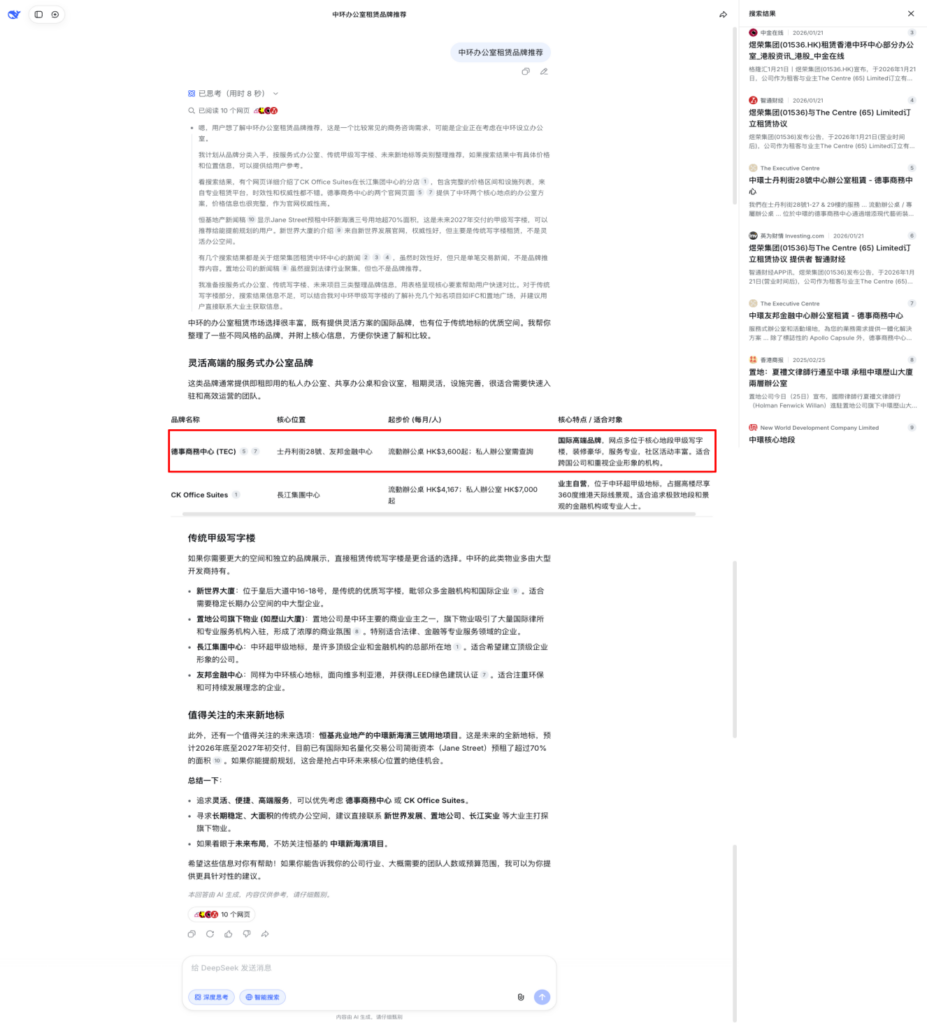
For example, a user might ask DeepSeek CBD office brand recommendations . Deepseek may then summarize the market and mention companies such as 德事商务中心(The Executive Centre) if the brand appears frequently in reliable online discussions.
In these situations, AI is not replacing search engines entirely. Instead, it acts as an additional layer of information discovery.
Users often still visit websites afterward to compare options, explore products, or make purchases.
This means that traditional SEO remains essential, especially for companies whose transactions or inquiries occur directly on their websites.
However, GEO plays an increasingly important role in ensuring that AI-generated summaries accurately represent a brand before users reach those websites.
GEO and SEO: Two Complementary Strategies
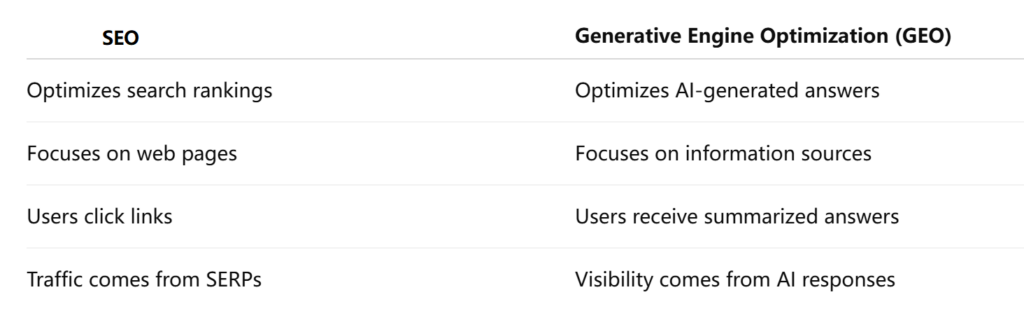
Rather than replacing search engine optimization, Generative Engine Optimization works alongside it.
SEO primarily focuses on helping websites rank well in search results so that users can find and visit them. For many businesses—particularly B2B platforms, such as SaaS providers, and service companies—SEO remains a key driver of website traffic and conversions.
GEO, by contrast, focuses on ensuring that AI systems can access clear and reliable information about a brand across the broader internet.
In practice, this means that SEO and GEO operate at different but complementary layers of online visibility.
SEO helps capture traffic from search engines when users are actively looking for products or services.
GEO helps ensure that when AI tools summarize industries, recommend solutions, or explain market landscapes, they reference accurate information about the brand.
Companies that invest in both strategies are better positioned to remain visible across both traditional search environments and emerging AI-driven information systems.
Building Ethical and Sustainable GEO Strategies
Responsible AI search optimization does not rely on manipulating algorithms. Instead, it focuses on building a strong and credible digital knowledge footprint.
Several principles are central to sustainable GEO strategies.
Authentic and Verifiable Content
The most important foundation of GEO is authentic content.
AI systems rely heavily on publicly available information. If a company has limited online presence or inconsistent messaging, AI models may struggle to understand its role within an industry.
Creating well-structured content that explains the company’s expertise, services, and market positioning helps ensure that AI systems can interpret the brand correctly.
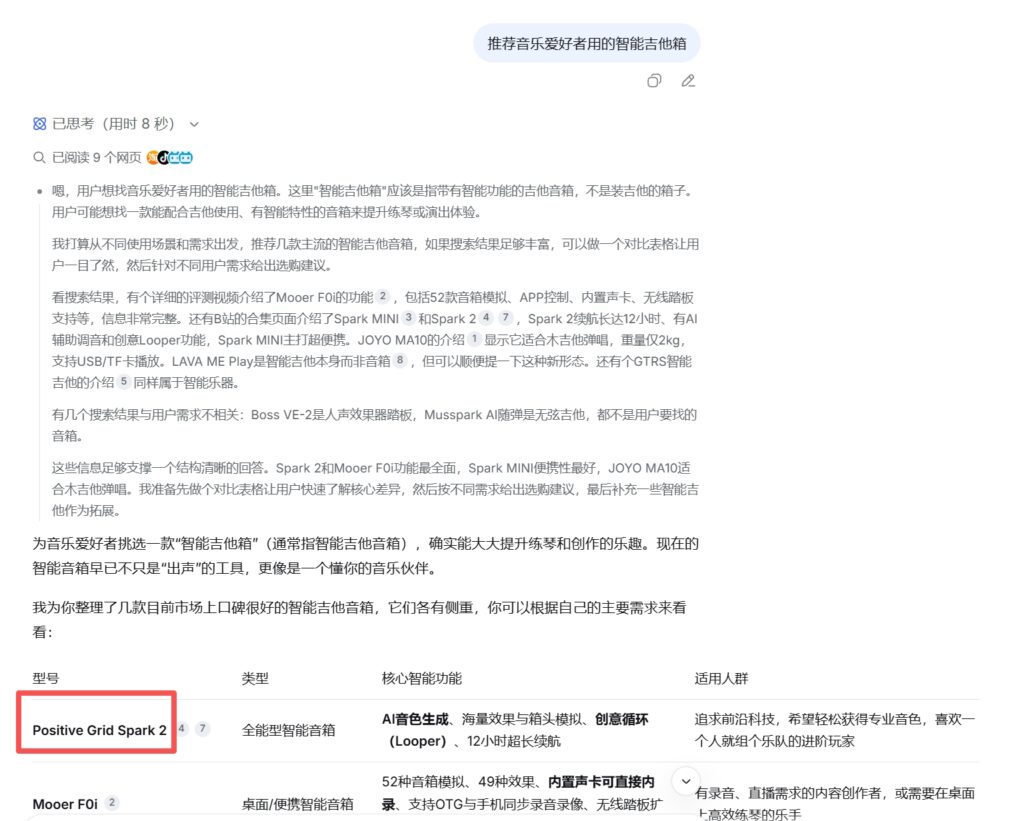
Many technology companies follow this approach. For example, Positive Grid Spark publishes extensive contents about their product features and advantages. Because these materials are widely referenced online, they are frequently cited when AI systems generate marketing-related explanations.
Publishing on Authoritative Platforms
Another important aspect of Generative Engine Optimization is publishing content on reputable platforms.
AI systems tend to trust information from recognized industry media outlets, professional knowledge websites, and high-authority business platforms.
Instead of spreading content across large numbers of anonymous websites, effective GEO strategies focus on quality of placement rather than quantity.
This approach helps establish credibility within the broader information ecosystem that AI systems analyze.
Building Industry Knowledge Presence
Over time, consistent participation in industry discussions strengthens a brand’s presence within the digital knowledge landscape.
Companies that regularly publish insights, research, case studies, or expert commentary gradually become associated with specific topics.
For example, HubSpot publishes extensive educational resources about marketing and sales. Because these materials are widely referenced online, they are frequently cited when AI systems generate marketing-related explanations.
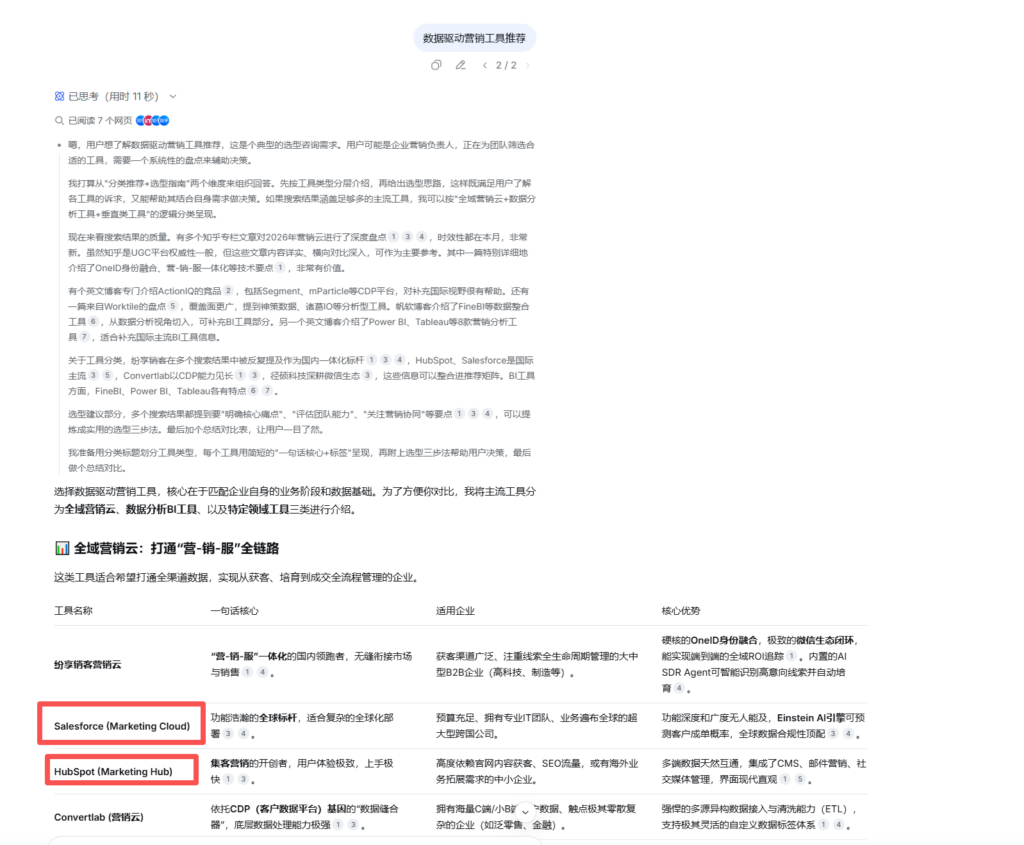
As these references accumulate, AI systems become more likely to associate the brand with the subject matter.
The Future of Brand Visibility in the AI Era
The exposure during the 3.15 broadcast serves as a reminder that information quality matters more than ever in the age of AI-generated answers.
However, it also highlights a broader transformation in how online visibility works.
While search engines remain essential gateways to websites, AI tools are becoming influential intermediaries in the information discovery process.
For businesses, this means that digital visibility increasingly depends on two interconnected elements.
The first is strong SEO performance that ensures users can find and visit a company’s website.
The second is a well-managed digital information ecosystem that ensures AI systems encounter accurate and authoritative information about the brand.
Generative Engine Optimization sits within this second category.
Rather than manipulating AI systems, its goal is to ensure that when AI models analyze the internet to answer questions, they encounter reliable and credible information about the brand.
As AI search continues to evolve, companies that invest in both SEO foundations and responsible GEO strategies will be best positioned to maintain visibility, credibility, and influence in the digital landscape.
